
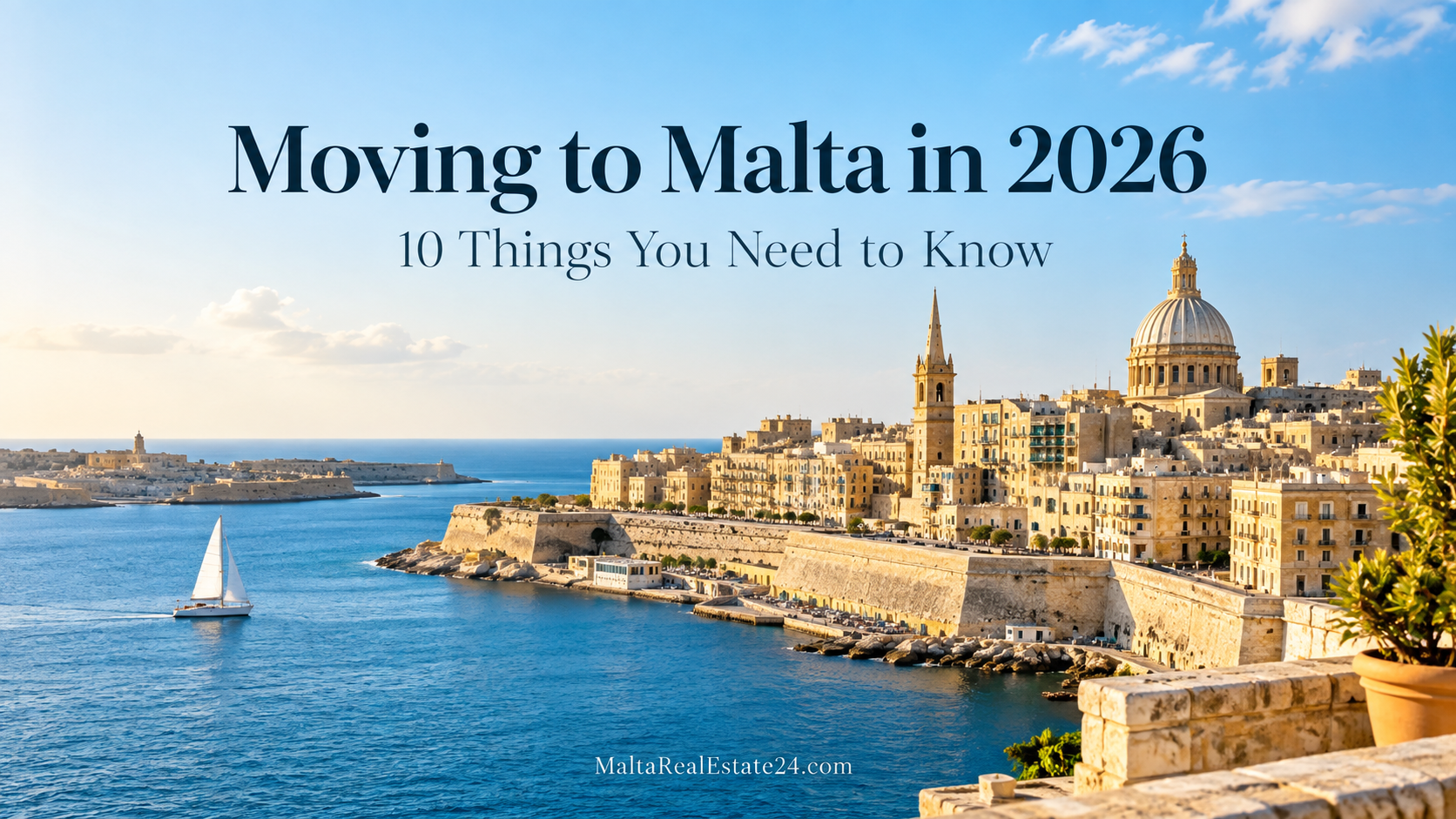
Thinking about moving to Malta in 2026?
Whether you are relocating for work, study, family life, retirement or simply a change of pace, Malta offers a unique mix of Mediterranean lifestyle, English-speaking convenience and a wide choice of places to live.
But choosing to move to Malta is about more than sunshine and sea views. Where you live, how you commute, what type of property you choose and your residence status can all shape your experience.
Here are 10 important things to know before moving to Malta in 2026.
1. Choose the Right Area Before You Choose the Property
Malta is small, but different areas can feel completely different.
Sliema and St Julian’s are busy, central and popular with professionals and international residents. Gżira and Msida are well connected and practical for work or study. Mellieħa offers a quieter coastal lifestyle, while Mosta and other central residential areas can suit families looking for more everyday convenience.
Gozo offers another option entirely, with a slower pace of life, smaller villages and more countryside.
If you are still deciding where to live, start with our Best Areas to Live in Malta in 2026 guide, which compares some of the island’s most popular locations.
2. Renting First Can Be a Smart Way to Start
If you have never lived in Malta before, renting for a while can give you time to understand the island before making a bigger property decision.
A location that looks perfect online may feel very different once you experience the traffic, parking, local shops and daily commute.
Renting first also gives you the chance to compare areas and discover what matters most to you before considering a permanent home.
3. Property Prices Can Vary Significantly
Your budget can buy very different types of property depending on the location.
Premium areas such as Sliema can command much higher prices than many residential areas or parts of Gozo.
Malta’s official Residential Property Price Index showed that residential property prices in Q1 2026 were 6.7% higher than a year earlier. Apartment prices were up 6.9% year on year.
That makes it especially important to compare several locations instead of focusing on only one area.
4. Think About Your Daily Commute
Distances in Malta may look short on a map, but travel time can vary considerably depending on traffic and time of day.
Before choosing a home, think about where you will work, where your children will go to school and how often you need to travel across the island.
Living slightly closer to your everyday destinations may be more valuable than choosing a larger property further away.
5. English Makes Everyday Life Easier
One of Malta’s biggest advantages for international residents is language.
Maltese and English are both official languages, which makes everyday tasks, work and communication easier for many people moving from abroad.
You will hear Maltese everywhere, but English is widely used in business, education and daily life.
6. Understand the Residence Rules Before You Move
Residence requirements depend on your nationality and reason for moving.
EU and EEA nationals can stay in Malta for up to three months without registering their residence. If they intend to live or work in Malta for longer than three months, they are required to register with Identità and obtain the appropriate residence document.
For non-EU nationals, different immigration and residence rules apply, so it is important to check the latest requirements directly with Identità before relocating.
7. You May Not Need a Car Everywhere
Public transport can be useful, particularly if you live in a central area.
Holders of a personalised Tallinja card can currently travel free on regular Day Routes, Night Routes and selected Special Services. Some services, including Tallinja Direct routes, are not included in the free-travel scheme.
Whether you need a car will depend heavily on where you live and where you need to travel each day.
8. Gozo Is Worth Considering
Moving to Malta does not necessarily mean living on the main island.
Gozo can be attractive to people looking for more space, traditional properties, countryside and a quieter lifestyle.
Victoria offers more everyday services, while villages such as Xagħra, Nadur and Qala provide a more residential feel. Coastal locations such as Marsalforn and Xlendi offer a different lifestyle again.
If Gozo interests you, read our Buying Property in Gozo: Everything You Need to Know guide for a more detailed look at the island.
9. Students and Families Should Plan Around Daily Life
If you are moving with children or coming to Malta to study, location becomes even more important.
Students often look around areas such as Msida, Gżira, San Ġwann and Swatar because of their proximity to the University of Malta and central areas.
Families may prioritise schools, quieter streets, parking and larger properties instead.
If you are moving for university, our Studying in Malta? Your Complete Guide to Finding the Perfect Place to Live is a useful place to start.
10. Don’t Rush Your Property Decision
Moving abroad is already a major decision. Your property choice does not need to be rushed as well.
Compare different neighbourhoods, view several properties and understand the full costs before committing.
Think beyond the photos.
Ask yourself whether the property works for your everyday life, not just whether it looks good online.
Malta offers everything from modern apartments and penthouses to townhouses, villas and traditional houses of character, so taking time to compare your options can make a big difference.
Is Moving to Malta Right for You?
For many people, Malta offers an attractive combination of Mediterranean living, English-speaking convenience and access to a diverse property market.
But there is no single way to live in Malta.
You may prefer the energy of Sliema, the residential feel of Mosta, the coastline around Mellieħa or the quieter lifestyle of Gozo.
The right choice comes down to your budget, daily routine and the lifestyle you want to create.
Start Your Property Search in Malta
MaltaRealEstate24 is a property marketplace bringing listings from private owners and estate agents together in one place.
Whether you are looking to rent first, buy a permanent home or simply explore what is available, you can browse properties across Malta and Gozo and contact the relevant advertiser directly.