Every year on 8 September, Malta celebrates one of the most meaningful dates in its national calendar: Victory Day, known locally as Jum il-Vitorja or Il-Vitorja.
It is a day that brings together history, faith, tradition and national pride. Across Malta and Gozo, people remember the courage and resilience that helped shape the islands, while communities mark the occasion withdd official commemorations, village feasts and the traditional Grand Harbour regatta.
What Is Victory Day in Malta?
Victory Day is a national public holiday commemorating three important moments in Malta’s history: the Great Siege of 1565, the end of the French occupation in 1800 and the events of 1943 during the Second World War.
Although these events took place centuries apart, they share a powerful theme. Each represents a moment when Malta endured extraordinary pressure and emerged with renewed strength.
The Three Historic Victories
The Great Siege of 1565
The Great Siege remains one of the best-known chapters in Maltese history.
In 1565, the Ottoman Empire attempted to take control of the Maltese Islands. Malta was defended by the Knights of St John together with the Maltese people.
After months of intense fighting, the siege came to an end in September. The victory became a lasting symbol of courage, determination and resistance, and it continues to occupy an important place in Malta’s national identity.
Several locations around the Grand Harbour, including Birgu, Senglea and Fort St Angelo, remain closely connected to the story of the Great Siege.
The End of the French Occupation in 1800
Victory Day also recalls the end of French rule in Malta.
French forces occupied the islands in 1798, but they soon faced strong resistance from the Maltese population and a prolonged blockade.
In September 1800, the French garrison surrendered. This brought another difficult period in Malta’s history to a close and gave 8 September an additional layer of national importance.
Malta and the Second World War
The third victory remembered on this day is connected to the Second World War.
Malta’s strategic position in the Mediterranean placed the islands at the centre of fierce conflict. The Maltese population endured years of bombing, shortages and extreme hardship.
On 8 September 1943, Italy’s armistice with the Allies was announced. The date became associated with another important turning point in Malta’s wartime story.
Malta’s extraordinary bravery had already been recognised in 1942, when King George VI awarded the George Cross to the people of Malta. The cross later became part of the Maltese national flag and remains a powerful symbol of the courage and resilience of the islands.
Victory Day and Il-Bambina
The date also carries strong religious significance.
The Feast of the Nativity of the Virgin Mary, commonly known in Malta as Il-Bambina, is celebrated on 8 September.
Traditional festas take place in Senglea, Naxxar and Mellieħa in Malta, as well as Xagħra in Gozo. Churches, village streets and public squares become part of celebrations combining faith, local identity and community tradition.
This combination of historical remembrance and religious celebration makes Victory Day especially distinctive. It is not simply a date from the past, but a living part of Maltese culture.
The Traditional Grand Harbour Regatta
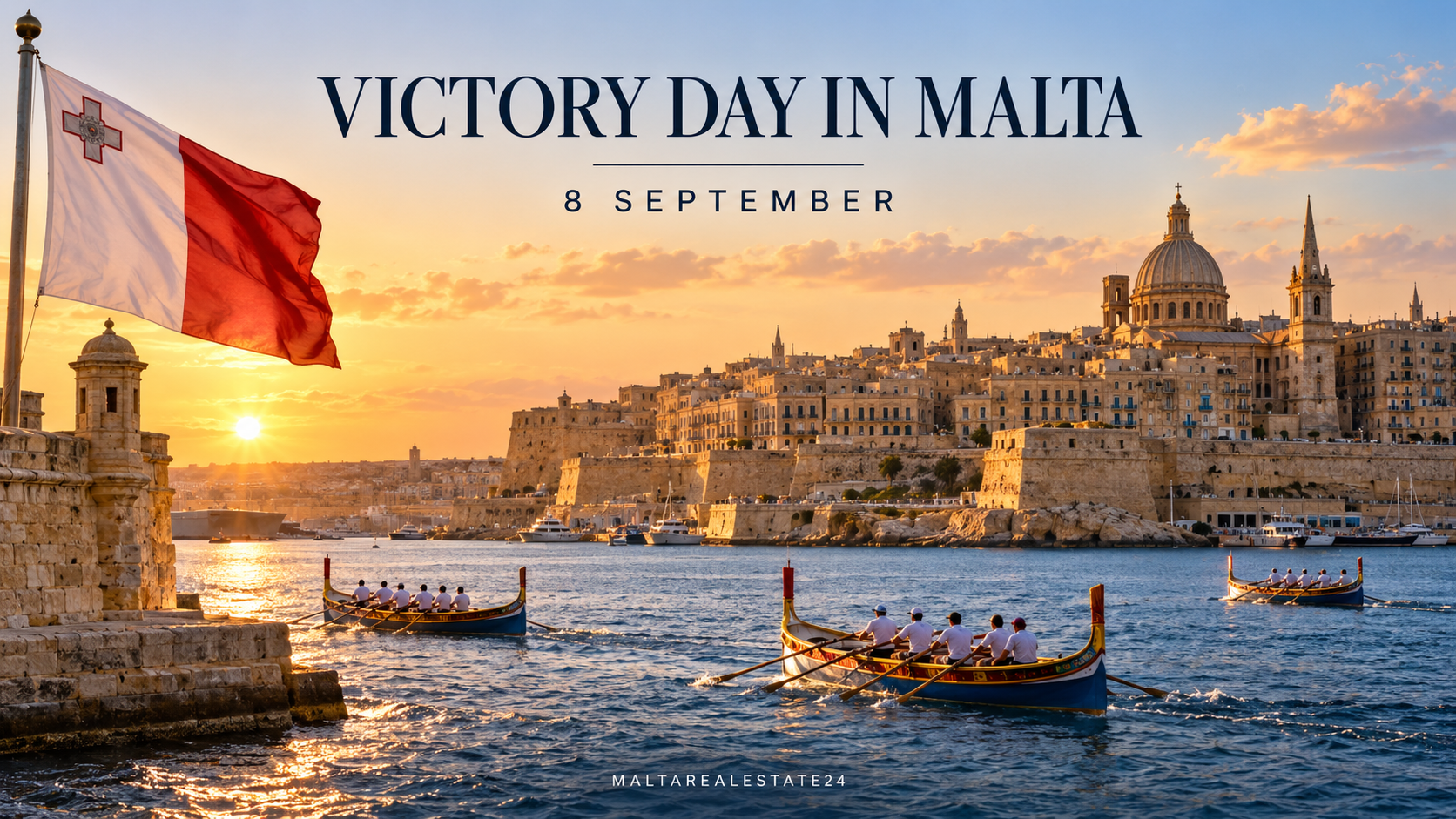
One of the most recognisable Victory Day traditions is the regatta held in Malta’s Grand Harbour.
Teams representing different harbour communities compete in colourful traditional rowing boats, surrounded by some of Malta’s most historic fortifications.
The impressive setting gives the event a unique atmosphere. The Grand Harbour is not only one of Malta’s most beautiful landmarks, but also a place that has witnessed many of the historical events remembered on Victory Day.
The regatta reflects the strong maritime identity of Malta and the close relationship between the islands and the Mediterranean Sea.
How Malta Celebrates Victory Day
Official ceremonies and commemorative activities are traditionally held to remember the people who defended Malta throughout its history.
At the same time, festas bring decorations, music and fireworks to several localities across Malta and Gozo. Maltese flags can be seen flying from homes, balconies and public buildings.
For both residents and visitors, Victory Day offers an opportunity to experience the close connection between Malta’s past and present.
It is a day of celebration, but also one of remembrance and gratitude.
Malta’s History Lives in Its Towns and Homes
Malta’s history is not confined to monuments or museums. It can be seen throughout the islands in fortified cities, narrow village streets, traditional wooden balconies, limestone façades and centuries-old townhouses.
From the historic harbour communities of the Three Cities to the old streets of Valletta and the traditional village cores of Malta and Gozo, every area has its own unique story.
The homes and neighbourhoods found across the islands form part of this cultural landscape. They have been shaped over generations by the people who lived, worked and raised their families there.
Victory Day reminds us that Malta is much more than a beautiful Mediterranean destination. It is a country with a strong identity, a proud history and a remarkable sense of community.
Happy Victory Day from MaltaRealEstate24
Today, MaltaRealEstate24 joins people across Malta and Gozo in honouring the courage, resilience and traditions that make these islands so special.
Whether you were born in Malta, have made the islands your home or simply feel a special connection to them, we wish you a peaceful, joyful and meaningful Victory Day.
Happy Victory Day, Malta! 🇲🇹